Creating a Strong Online Presence
-
April 3, 2026
Creating a Strong Online Presence
Creating a Strong Online Presence
In today's connected professional world, your online presence is often the first thing a potential employer, client, or professional contact encounters. A strong, professional online presence can open doors and create opportunities — a weak or absent one can close them.
Start with LinkedIn
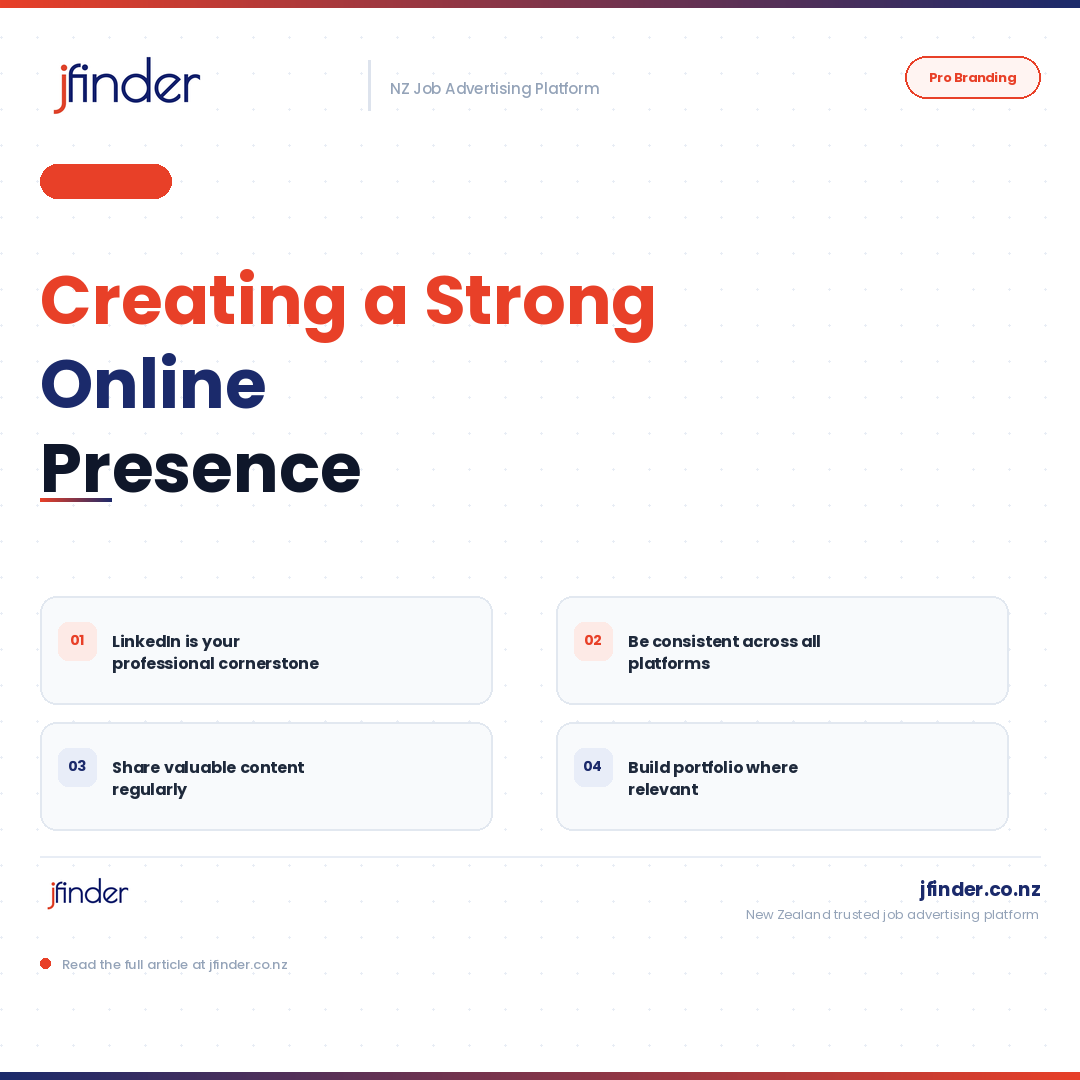
LinkedIn is the cornerstone of a professional online presence. A complete, well-written, and regularly updated profile signals that you are active, engaged, and serious about your professional development. Optimise your headline, About section, and experience descriptions with relevant keywords.
Be Consistent Across Platforms
Your professional identity should be consistent across all online platforms where you have a presence. Inconsistencies in your professional narrative — different job titles, gaps in your timeline, or contradictory information — can raise credibility concerns.
Share Valuable Content
Regularly sharing articles, insights, or professional reflections relevant to your field builds your reputation as a knowledgeable and engaged professional. Content sharing increases your visibility and positions you as a contributor to your professional community.
Manage Your Privacy Settings
Review the privacy settings on personal social media accounts to ensure that content not intended for professional audiences is not publicly visible. Employers and recruiters do search for candidates online, and your personal content can affect their perception of you.
Build an Online Portfolio Where Relevant
For professionals in creative, technical, or consulting fields, an online portfolio — hosted on a personal website or professional platform — can provide compelling evidence of your work and capabilities.
A strong online presence is a career asset that works for you continuously. Invest in building and maintaining it, and the professional dividends will follow.