Communication Skills for Career Success
-
March 31, 2026
Communication Skills for Career Success
Communication Skills for Career Success
Of all the professional skills that contribute to career success, communication is perhaps the most fundamental. The ability to express yourself clearly, listen actively, and engage professionally with colleagues, clients, and stakeholders is central to virtually every professional role and every stage of career development.
Written Communication
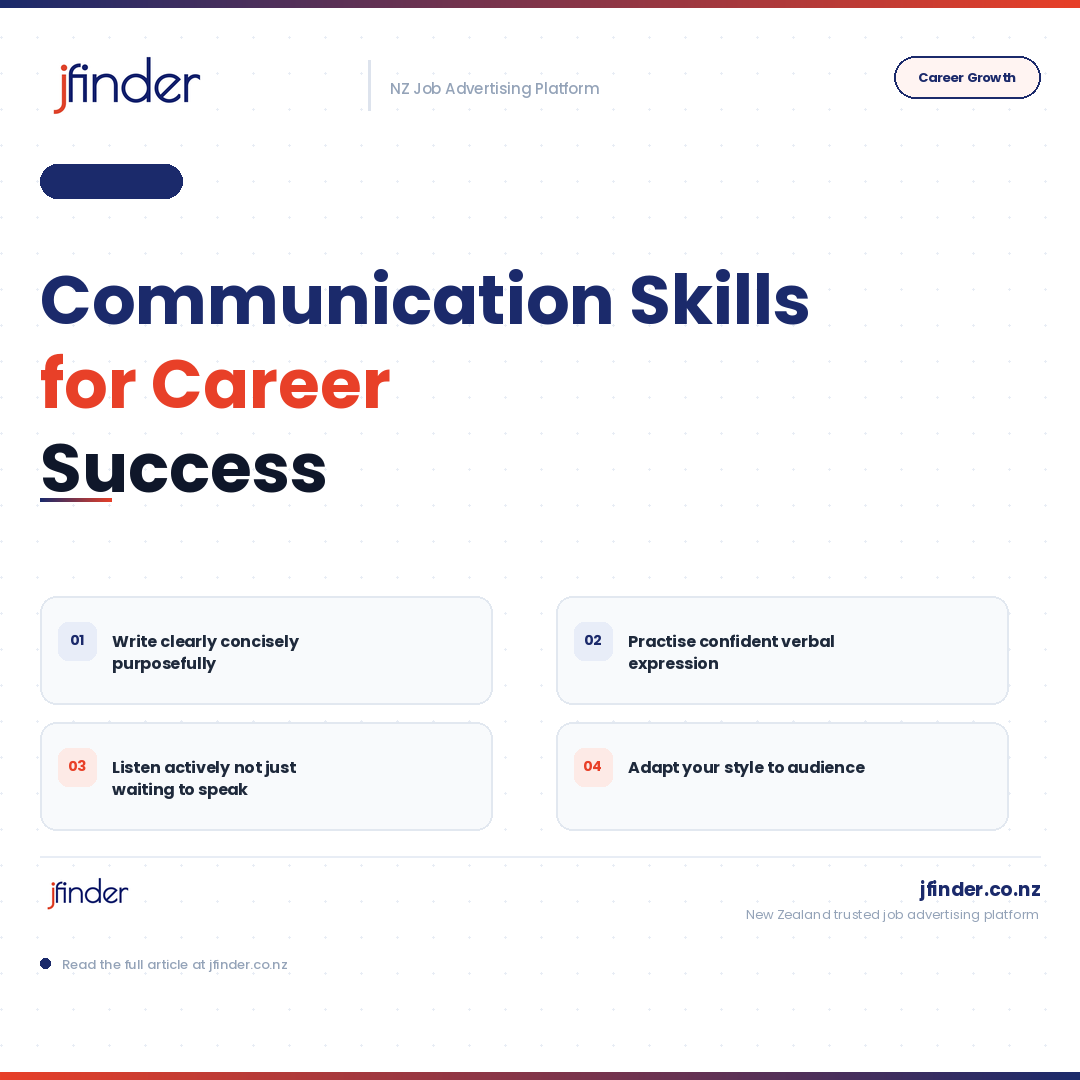
In most professional environments, written communication accounts for a significant proportion of daily interaction. The ability to write clearly, concisely, and appropriately — whether in emails, reports, or professional correspondence — reflects your intelligence, credibility, and professionalism.
Verbal Communication
Verbal communication encompasses how you express yourself in meetings, presentations, phone calls, and informal conversations. Clarity, confidence, and the appropriate use of tone and language are all essential components of effective spoken communication.
Active Listening
Effective communication is not one-directional. Active listening — giving your full attention, asking clarifying questions, and demonstrating genuine engagement with what others are saying — is as important as how you express yourself. It builds trust and ensures that communication is genuinely two-way.
Adapting Your Communication Style
Different audiences require different communication approaches. The ability to adapt your language, tone, and delivery to suit the context — whether you are speaking to a client, a colleague, or a senior executive — is a mark of communication maturity.
Non-Verbal Communication
Body language, eye contact, facial expressions, and physical presence all contribute to how your communication is received. Aligning your non-verbal signals with your verbal message creates consistency and credibility.
Communication skills can always be developed further. Invest in them deliberately, and they will repay that investment throughout your entire career.