Soft Skills That Make You Stand Out
-
March 31, 2026
Soft Skills That Make You Stand Out
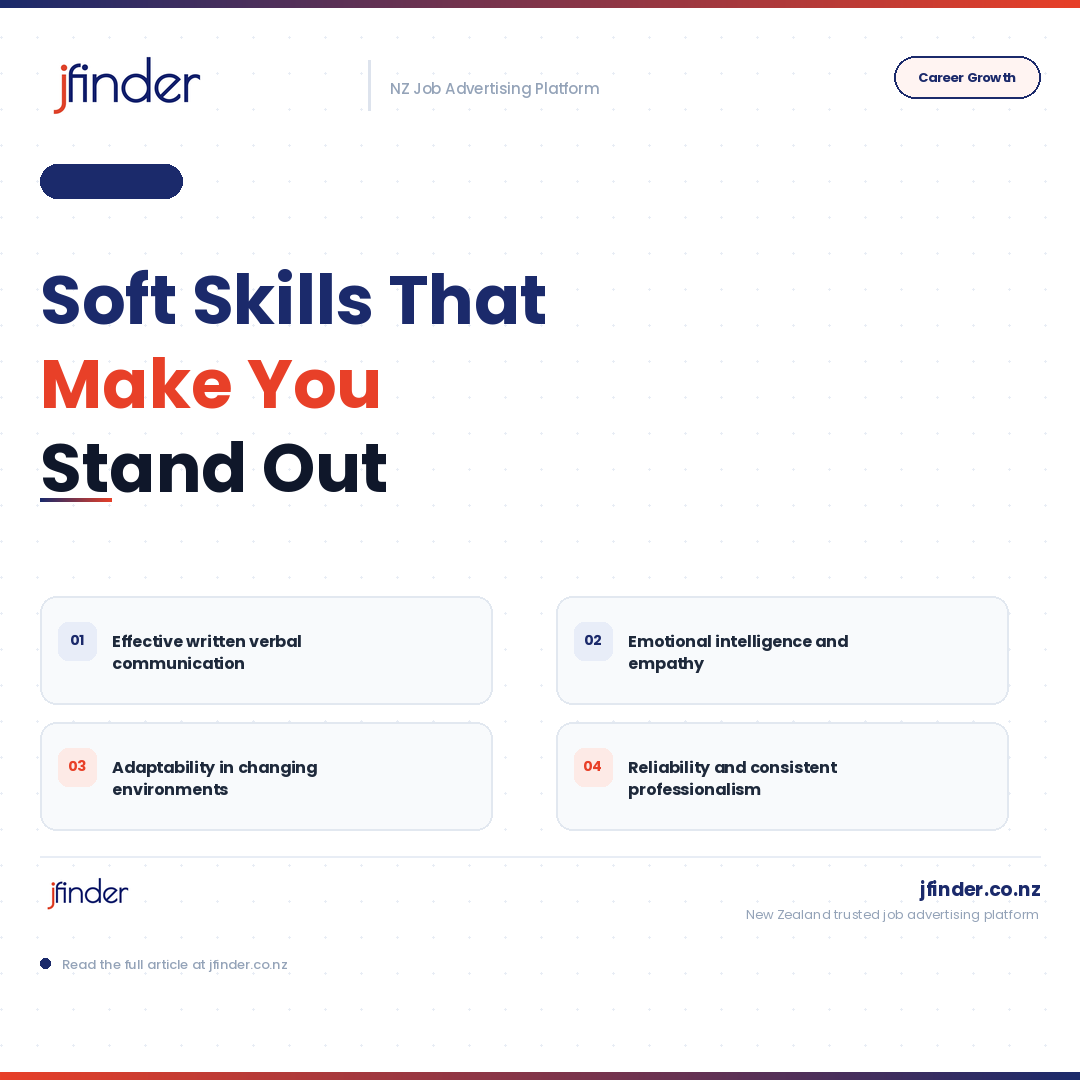
Soft Skills That Make You Stand Out
In a world where technical qualifications are increasingly accessible, soft skills have become a powerful differentiator between candidates. Employers consistently report that soft skills — the interpersonal, behavioural, and communication qualities that determine how you work with others — are among the most difficult to find and the most highly valued.
Effective Communication
The ability to communicate clearly, confidently, and appropriately across a range of audiences and formats is foundational to professional success. This includes written communication, verbal presentation, active listening, and the ability to adapt your communication style to different contexts.
Emotional Intelligence
Emotional intelligence — the capacity to understand and manage your own emotions, and to empathise with and influence others — is strongly correlated with leadership effectiveness and professional performance. Employers value it highly in all roles, but especially in those involving client interaction or team leadership.
Adaptability
The ability to respond constructively to change, manage ambiguity, and maintain performance under evolving conditions is increasingly essential in modern workplaces. Demonstrating that you thrive in dynamic environments is a significant competitive advantage.
Problem-Solving
Creative, analytical problem-solving — the ability to identify issues, generate options, and implement effective solutions — is universally valued across industries and roles. Employers want professionals who bring solutions, not just problems.
Professionalism and Reliability
Consistently meeting commitments, conducting yourself with integrity, and maintaining a professional standard in all interactions builds trust and reputation over time — the two most durable career assets.
Soft skills are not soft in their impact. Developing them deliberately can set you apart from technically equivalent candidates and accelerate your professional growth.