Interview Mistakes to Avoid
-
March 28, 2026
Interview Mistakes to Avoid
Interview Mistakes to Avoid
Even the most qualified candidates can undermine their chances in an interview through avoidable mistakes. Being aware of the most common interview errors — and how to prevent them — is as important as knowing how to present your strengths effectively.
Arriving Late or Underprepared
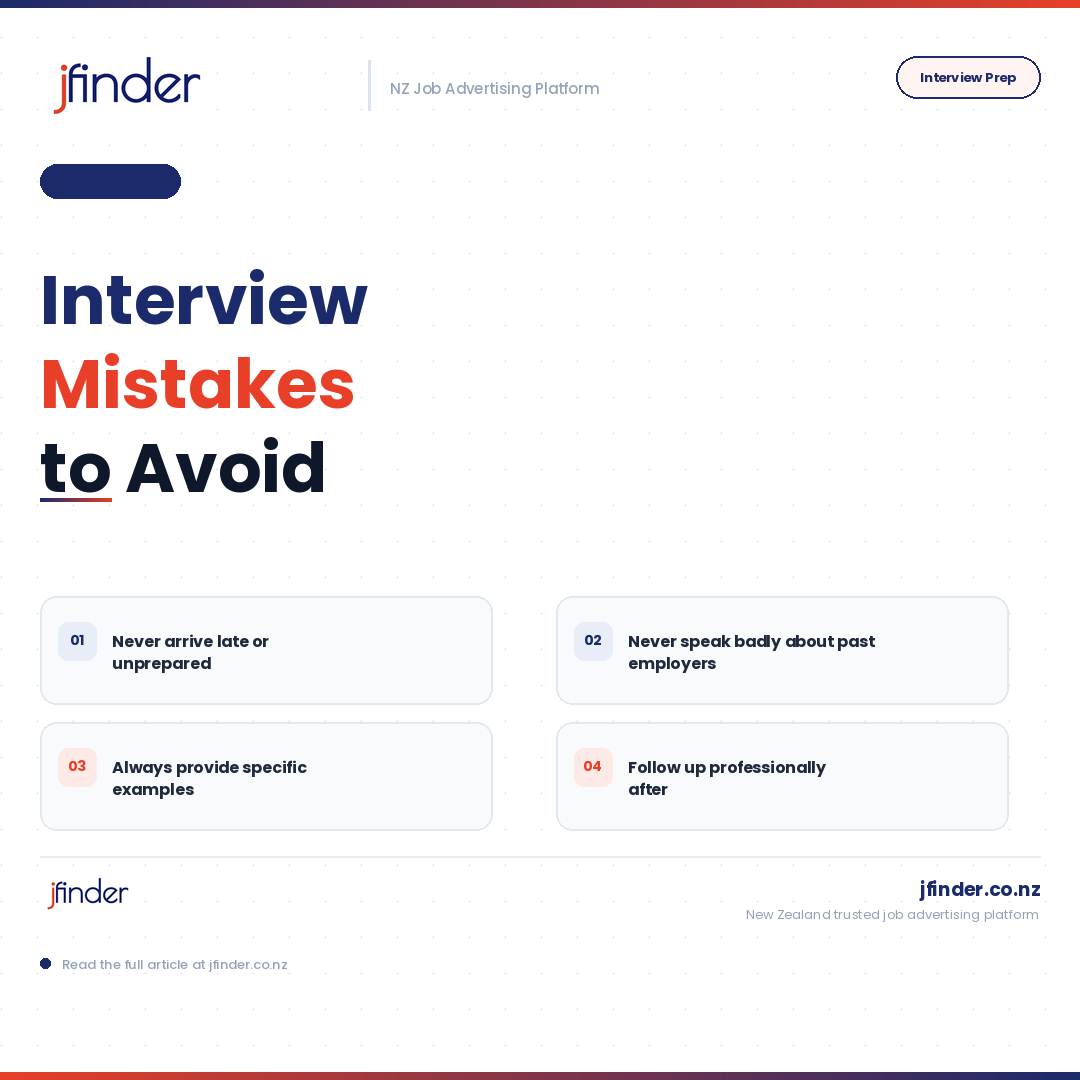
Punctuality is a basic professional expectation. Arriving late — or logging on late for a virtual interview — signals disorganisation and lack of respect. Similarly, arriving without having researched the company or role demonstrates a lack of genuine interest. Both are difficult first impressions to recover from.
Speaking Negatively About Previous Employers
Speaking disparagingly about past employers or colleagues is one of the most damaging things a candidate can do in an interview. It signals a potential for conflict, a lack of professionalism, and raises questions about your judgement. Always speak about previous experiences in neutral or constructive terms.
Failing to Provide Specific Examples
Vague, generalised answers do not demonstrate capability. When asked about your experience or skills, always support your claims with specific, concrete examples. The STAR method is an effective tool for structuring these responses.
Not Asking Any Questions
Declining to ask questions when invited to do so sends the message that you are not genuinely interested in the role or organisation. Always prepare thoughtful questions in advance.
Overlooking the Follow-Up
Failing to send a follow-up message after an interview is a missed opportunity. A brief, professional thank-you email within 24 hours reinforces your interest and leaves a positive final impression.
Avoiding these common mistakes is within every candidate's control. Preparation, professionalism, and genuine engagement will see you through most interviews successfully.