Skills You Should Add to Your Resume
-
March 22, 2026
Skills You Should Add to Your Resume
Skills You Should Add to Your Resume
The skills section of your resume provides employers with a quick overview of your professional capabilities. When constructed thoughtfully, it can significantly strengthen your application — particularly in the initial screening process.
- Hard Skills vs. Soft Skills
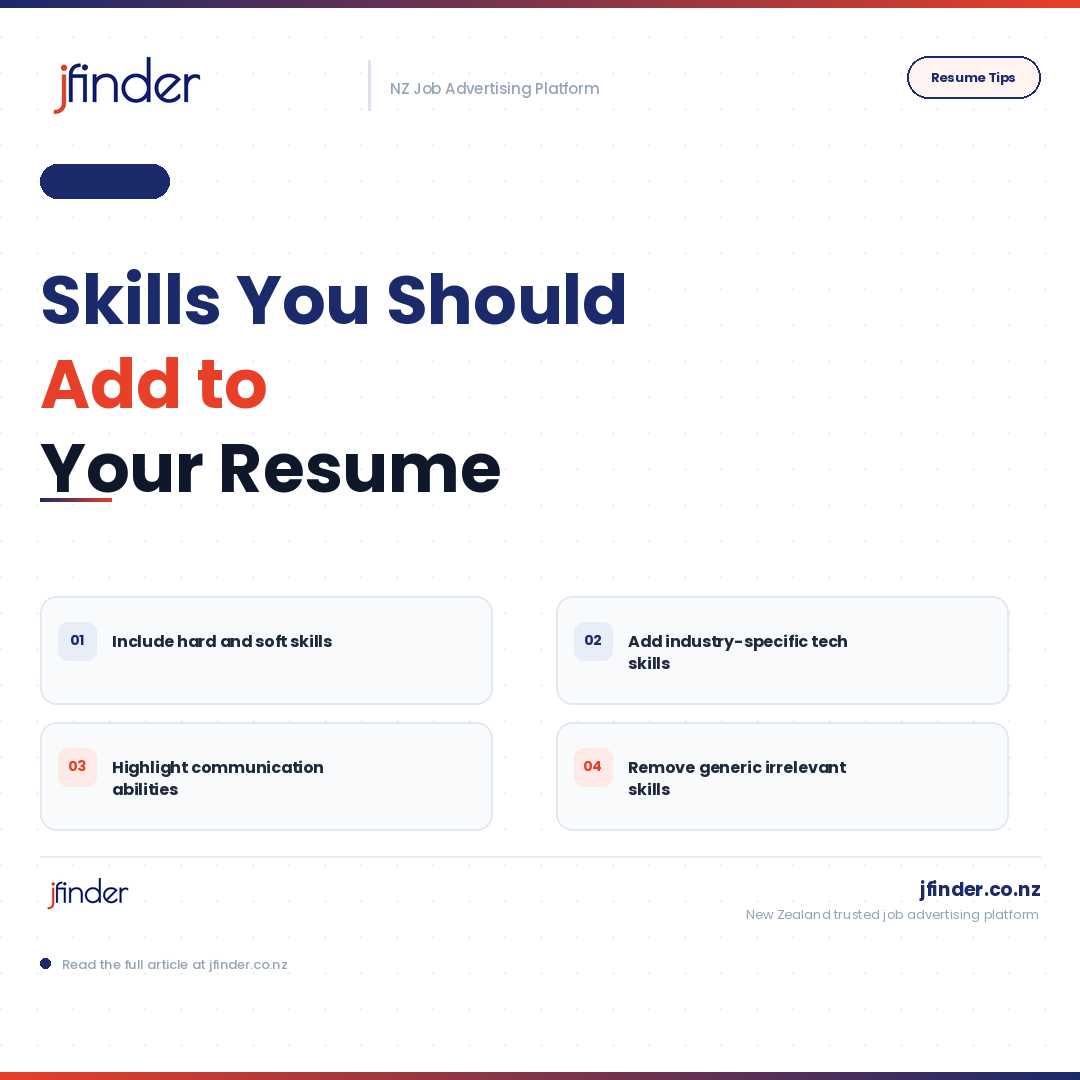
Hard skills are technical, role-specific competencies that can be taught and measured — such as data analysis, software proficiency, financial modelling, or project management. Soft skills are interpersonal and behavioural qualities — such as leadership, communication, adaptability, and critical thinking. A strong resume typically includes both.
- Industry-Specific Technical Skills
Research the roles you are targeting and identify the technical skills most commonly required. If a job description repeatedly mentions a specific tool, programme, or methodology, and you possess that skill, ensure it appears in your resume.
- Digital and Technology Skills
In virtually every industry, digital literacy is now a baseline expectation. Include relevant software, platforms, or systems you are proficient in. For roles in more technical fields, be specific about your level of competency.
- Communication and Collaboration
Employers consistently rank communication and teamwork among their most valued competencies. Rather than simply listing these, consider briefly noting contexts in which you have applied them.
- What to Avoid
Avoid listing generic skills that offer no differentiation, such as "Microsoft Word" or "email." Focus on skills that are genuinely relevant, verifiable, and meaningful to the roles you are applying for.
Your skills section is an opportunity to demonstrate alignment with employer needs. Approach it with the same care and strategy you apply to the rest of your resume.