The perfect resume layout for job
-
March 21, 2026
The perfect resume layout for job applications
The Perfect Resume Layout for Job Applications
The layout of your resume has a significant impact on whether it is read thoroughly or set aside. A well-organised, professional layout helps employers quickly identify your qualifications and demonstrates your ability to communicate clearly.
Standard Resume Sections
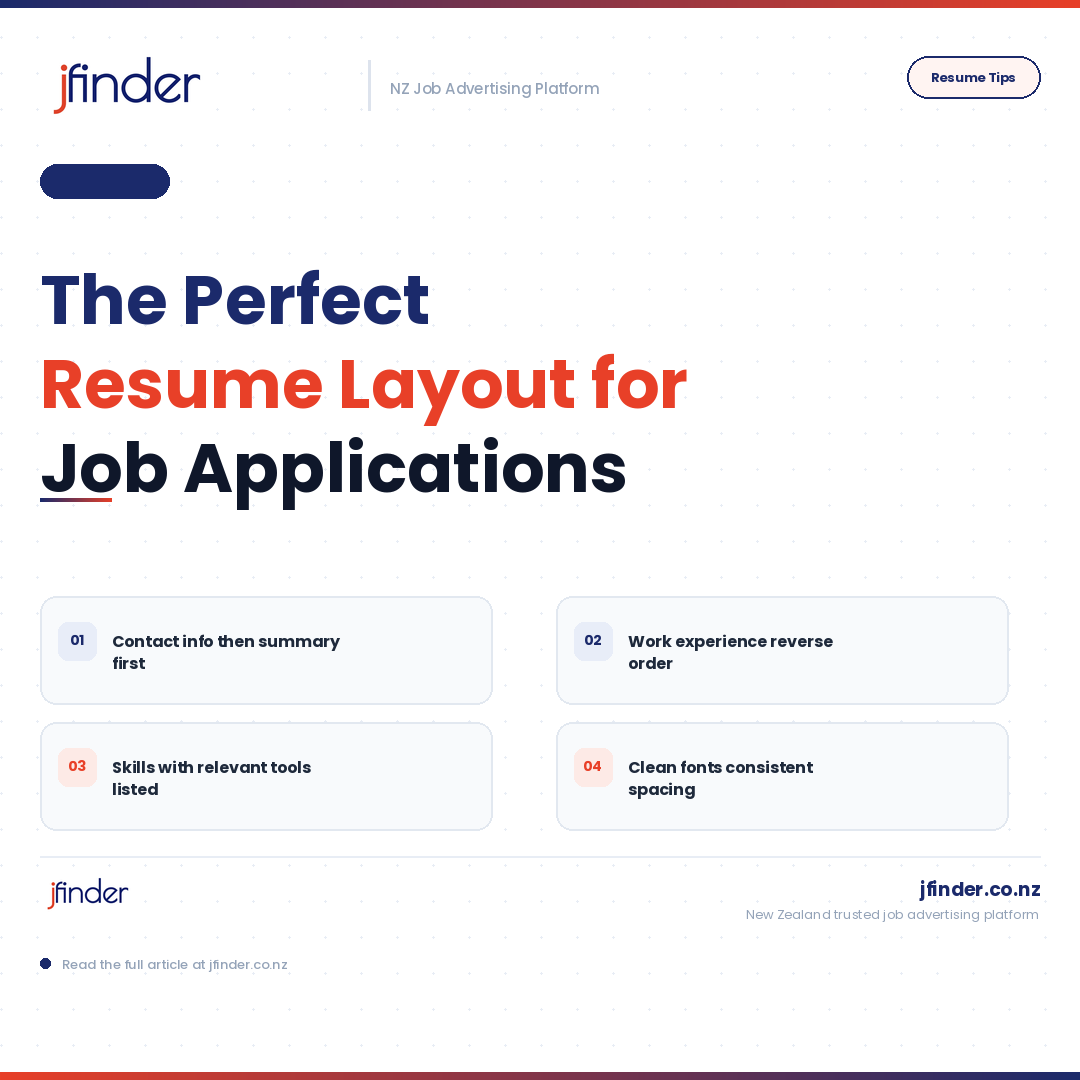
A professional resume typically includes the following sections in this order: contact information, professional summary, work experience, education, and skills. Depending on your industry or experience level, you may also include sections for certifications, volunteer work, or professional affiliations.
Contact Information
Place your full name prominently at the top, followed by your phone number, professional email address, city and country of residence, and a link to your LinkedIn profile. Avoid including a physical address unless specifically requested.
Work Experience
List your roles in reverse chronological order — most recent first. For each position, include your job title, employer name, dates of employment, and three to five bullet points describing your key contributions and achievements.
Education
Include your highest qualification, the name of the institution, and the year of completion. For recent graduates, this section may appear before work experience.
Skills Section
List technical and professional skills that are relevant to the roles you are applying for. Avoid padding this section with generic traits. Focus on specific, verifiable competencies.
Formatting Principles
Use a clean, professional font. Maintain consistent margins, and use bold or slightly larger text for section headings. Keep the document to one or two pages depending on your experience level.
A resume with a logical, professional layout makes an immediate positive impression. Treat your layout as the framework that allows your qualifications to shine.