How to Write a Strong Resume Summary
-
March 21, 2026
How to Write a Strong Resume Summary
How to Write a Strong Resume Summary
The resume summary sits at the top of your document, immediately below your contact information. It is one of the most valuable sections of your resume — and one of the most frequently written poorly. A strong resume summary introduces you as a professional, highlights your key strengths, and encourages the reader to continue reviewing your application.
- What a Resume Summary Should Accomplish
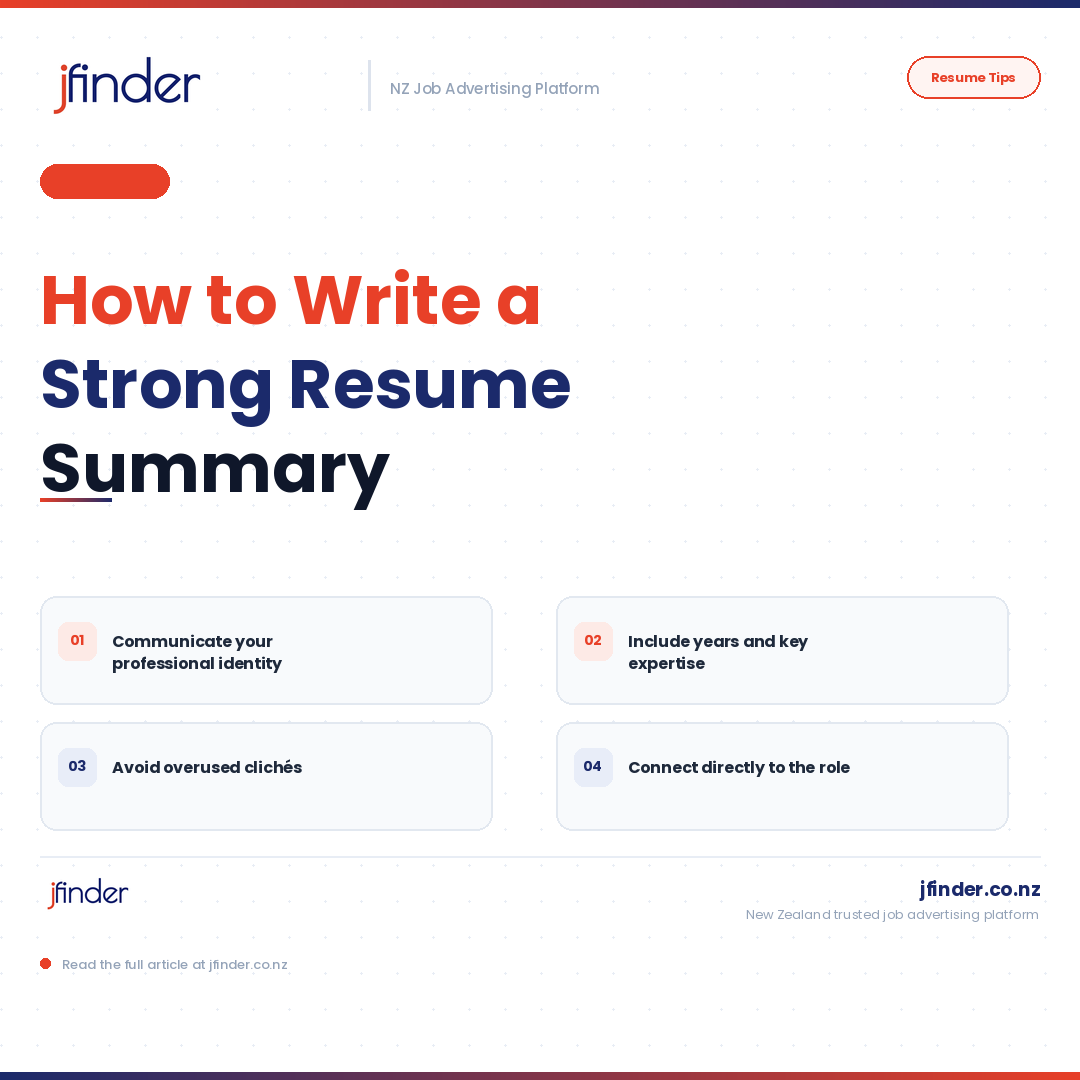
In two to four sentences, your summary should communicate your professional identity, your most relevant experience or qualifications, and the value you bring to a prospective employer. It should be written specifically for the role you are applying for, not as a generic statement applicable to any job.
- Elements of an Effective Summary
A strong resume summary typically includes your professional title or area of expertise, your years of experience, two or three key strengths or specialisations, and optionally, a brief statement of what you are seeking. Keep the language active, specific, and confident.
- What to Avoid
Avoid clichés such as "motivated team player," "results-driven professional," or "passionate about excellence." These phrases are overused and add no meaningful information. Instead, focus on what makes your professional background distinctive and relevant to the employer.
A Practical Example
Rather than writing: "Hardworking professional with good communication skills seeking a challenging role," consider: "Experienced operations manager with seven years in logistics and supply chain, specialising in process optimisation and cross-functional team leadership. Proven record of reducing operational costs while maintaining service standards."
The second version is specific, credible, and immediately communicates value.